Blog
How Accurate Diagnostics Prevent Wrong Repairs and Costly Parts Replacements

Modern vehicles are no longer simple mechanical machines. Today’s cars, trucks, and heavy-duty equipment rely on multiple electronic control units (ECUs) that constantly exchange data. While fault codes are useful, relying on them alone often leads to incorrect repairs, unnecessary parts replacement, and wasted time.
Accurate diagnostics is the difference between guessing and fixing the real problem.
Why Fault Codes Alone Are Not Enough
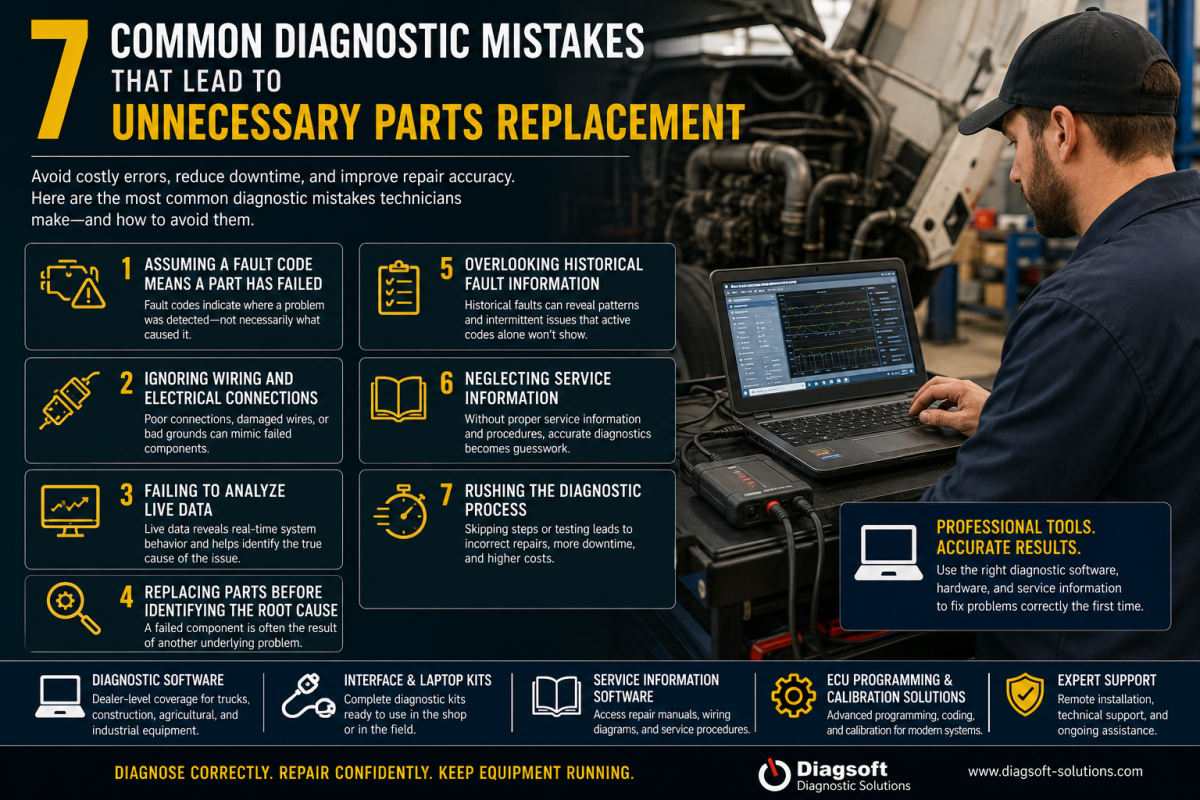
A diagnostic trouble code (DTC) does not always indicate the root cause of a failure. In many cases:
- A fault code is triggered by a secondary issue
- One malfunction causes multiple related codes
- Intermittent problems leave misleading stored errors
Replacing parts based only on fault codes often results in repeat failures and increased repair costs.
Live Data Analysis Reveals the Real Issue
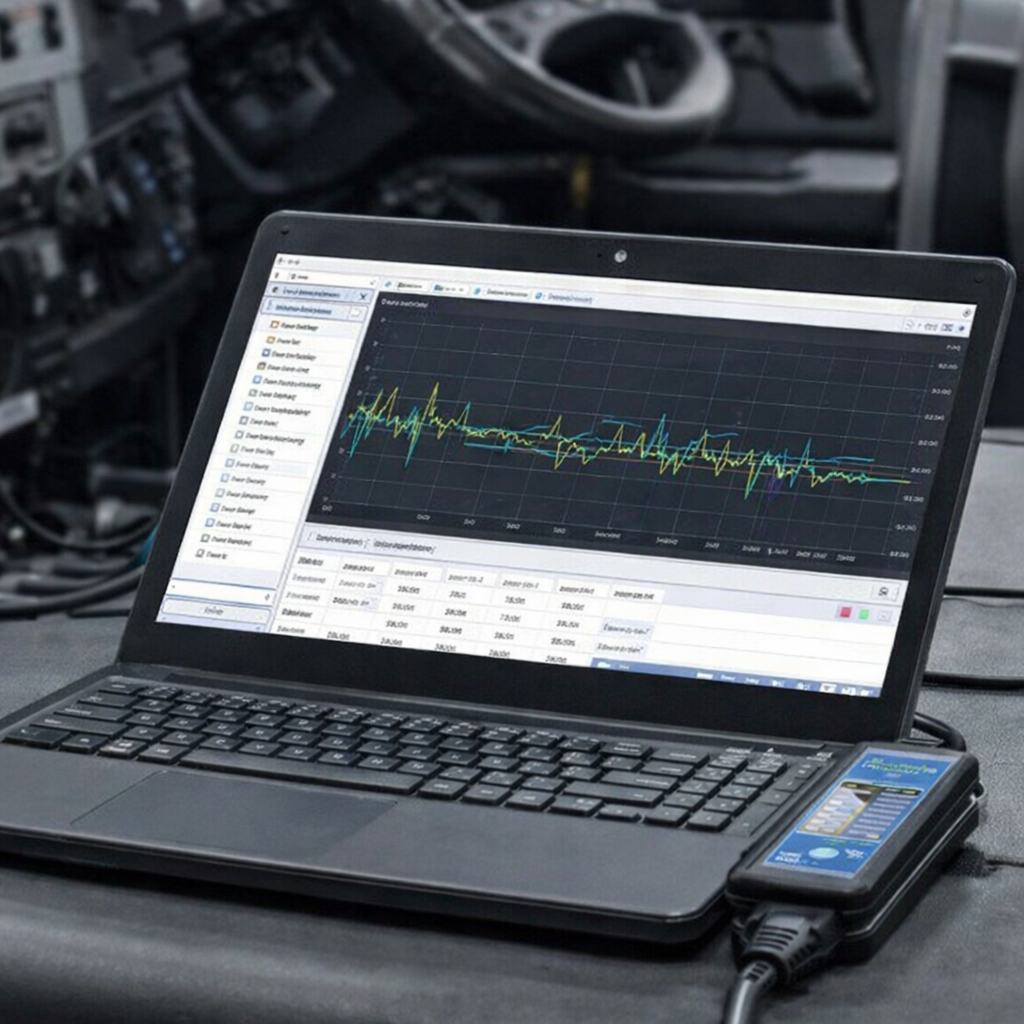
Professional diagnostics go beyond reading codes. By analyzing live data, technicians can compare expected values with real-time system behavior. This includes:
- Sensor voltage and signal plausibility
- Temperature, pressure, and flow comparisons
- Communication status between control modules
Live data allows technicians to confirm whether a component is truly faulty or simply reacting to another system issue.
System Tests and Actuator Control Matter
Advanced diagnostics also include active system testing. This allows technicians to command components such as valves, injectors, fans, or actuators and observe how the system responds.
These tests help identify wiring issues, control problems, or mechanical failures that fault codes alone cannot detect.
Diagnostics Before Repair Decisions Saves Money
A structured diagnostic approach ensures that repairs are based on verified information, not assumptions. Proper diagnostics help technicians:
- Avoid unnecessary parts replacement
- Reduce vehicle downtime
- Confirm repairs before returning equipment to service
- Prevent repeat failures
This approach is especially critical for modern commercial vehicles, agricultural machinery, and electronically controlled systems.
The Role of Professional Diagnostic Software
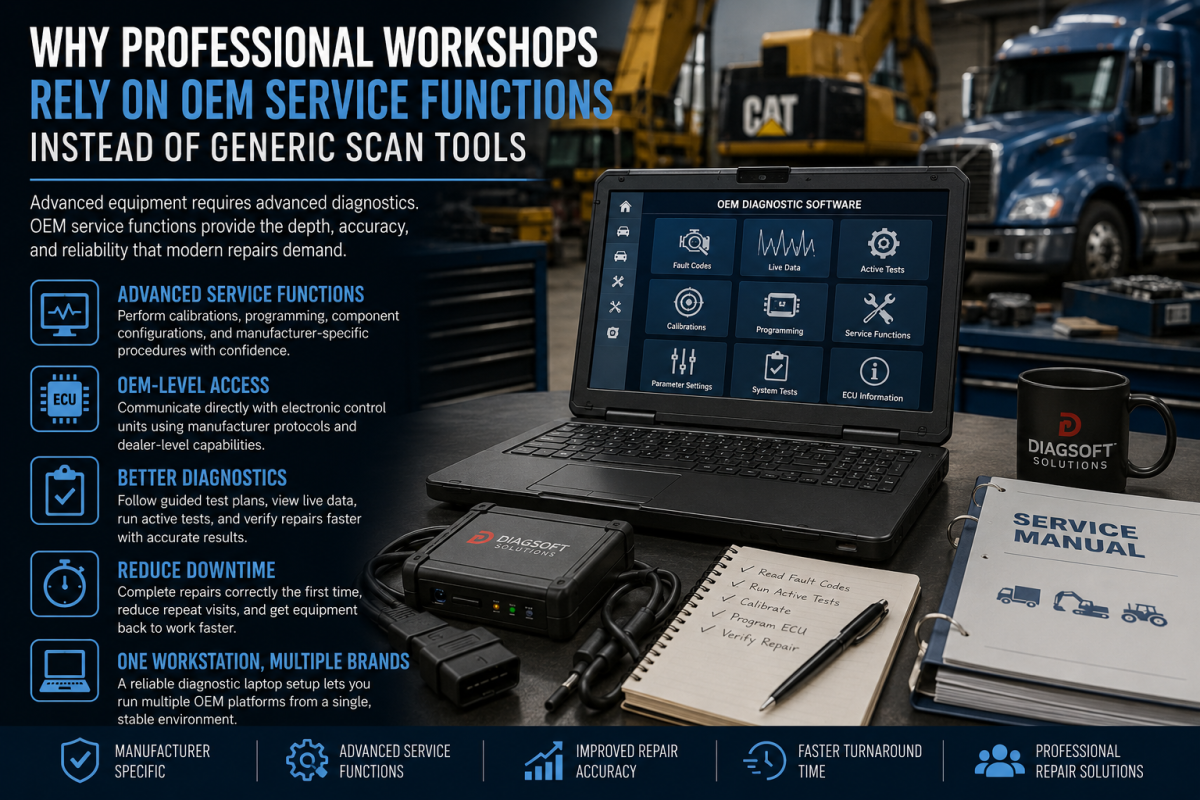
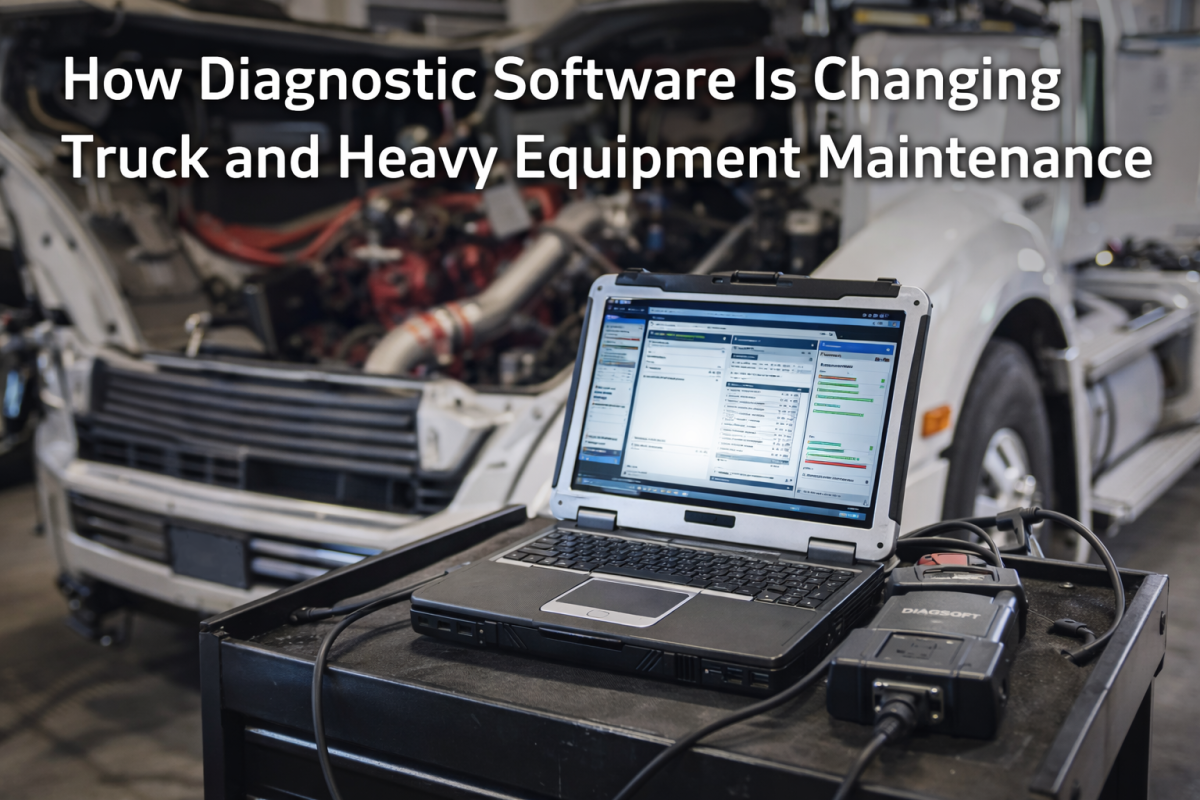
To perform accurate diagnostics, technicians rely on advanced diagnostic software that provides full system access, live data, and manufacturer-level testing capabilities.
Using professional tools ensures that repair decisions are based on real system behavior, not guesswork.
Final Thoughts
Accurate diagnostics is not about reading fault codes faster—it’s about understanding how systems work together. When diagnostics are done correctly, repairs are precise, reliable, and cost-effective.
In modern vehicles, diagnostics is no longer optional. It is the foundation of professional repair.
Discover more from Diagsoft Solutions
Subscribe to get the latest posts sent to your email.